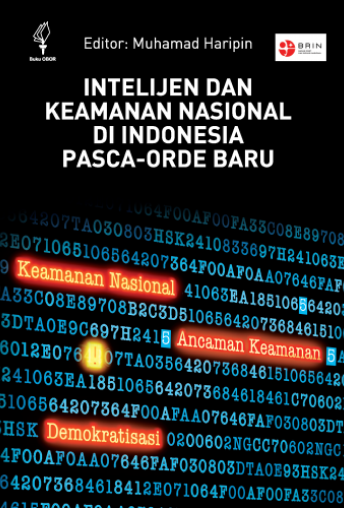
Intelligence and National Security in Post–New Order Indonesia
-
Author:
Muhamad Haripin, PhD
-
Publisher:
Yayasan Pustaka Obor Indonesia -
Publication Year:
2022
This book aims to explain the role of state intelligence in Indonesia after the resignation of President Suharto in 1998. Although intelligence has an important role as the “first line in the national security system,” studies on intelligence remain scarce compared to research on the military or police institutions. The book enriches the field of intelligence, democracy, and national security studies in Indonesia by discussing four strategic aspects: the evolution of security threat perceptions; the use and mastery of information technology to support intelligence activities; the recruitment and education of human resources; and oversight mechanisms over intelligence developed in the post–New Order era.
Alongside the wave of democratisation sweeping Indonesia’s political landscape in the late 1990s, various groups began to pay closer attention to the implementation of security sector reform. The public has pushed for better intelligence governance aligned with democratic principles, such as transparency and accountability. The hope is for intelligence agencies to develop into professional and effective organisations in fulfilling their tasks. With the emergence of new threats in Indonesia, such as terrorism and cyberattacks, intelligence is increasingly required to enhance its technical capabilities, such as in information collection and analysis as well as counterintelligence against adversaries. In short, intelligence reform is designed as an agenda closely tied to the broader project of political democratisation and strengthening of the national security system in Indonesia.